Understanding the Individual
Two people may present with similar goals yet require very different interventions.
One individual may be recovering from surgery and focused on healing, comfort, mobility and confidence. Another may be looking to improve physical performance, increase resilience or prepare for a demanding event. Others may wish to address metabolic health, body composition or long-term disease risk.
Recovery may be influenced by inflammation, sleep quality, nutritional status, circulation, mobility and cardiovascular fitness. Performance may be limited by aerobic capacity, metabolic efficiency or inadequate recovery. Long-term health may be influenced by body composition, glucose regulation, hormonal factors or lifestyle patterns.
Careful measurement and assessment helps identify the factors most relevant to the individual, allowing recommendations and interventions to be selected with greater precision and purpose.
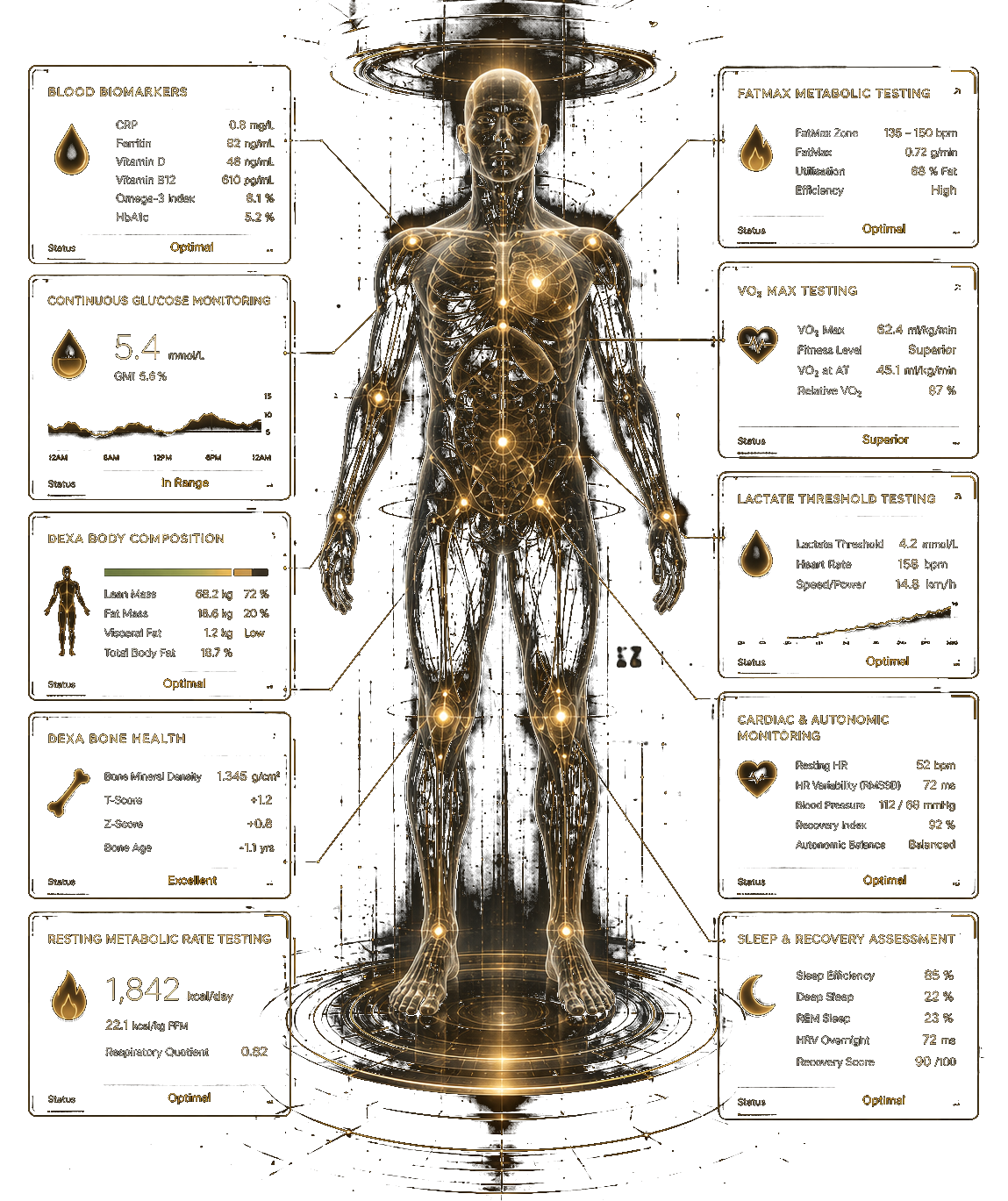
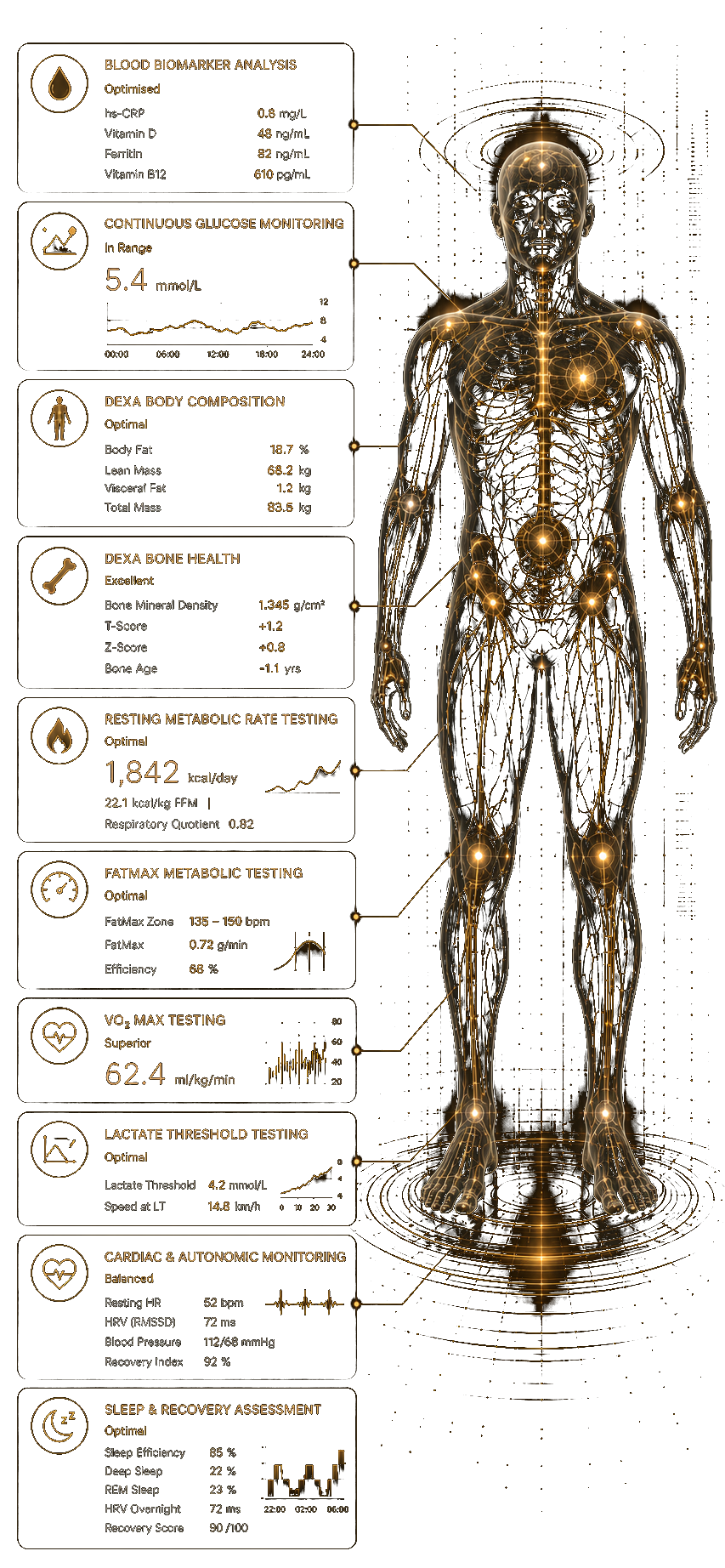
Select any box from the graphic below to understand what each test does and what we try to learn from it. A number of tests are not relevant to all individuals.















Assessment & Measurement
Blood Biomarker Analysis
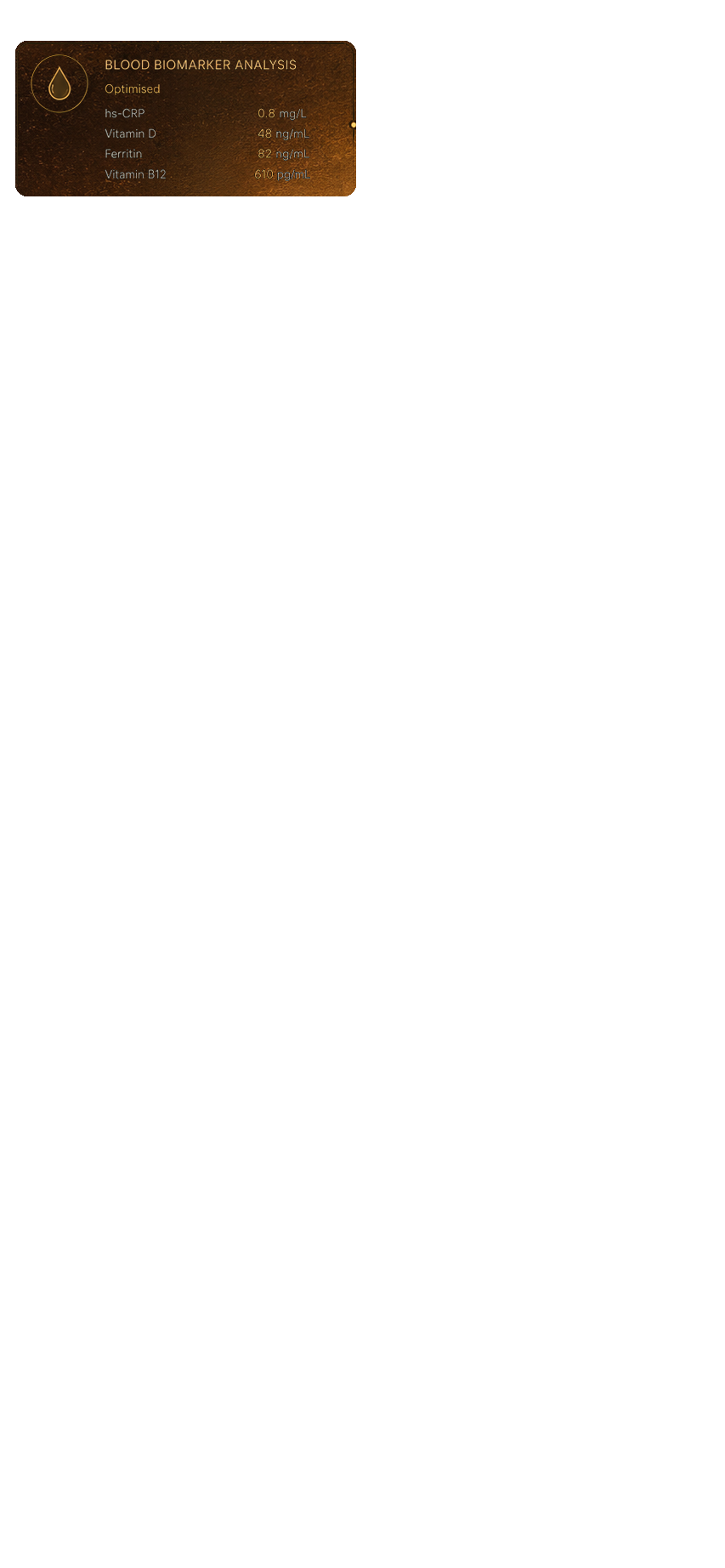
Blood biomarker analysis provides a detailed view of internal health, including markers associated with inflammation, nutrient status, glucose control, cardiovascular risk and metabolic function.
Results help identify factors that may be limiting recovery, physical performance or long-term health, allowing recommendations to be shaped around objective data rather than assumption.
Testing may be reviewed alongside body composition, glucose monitoring, sleep assessment and exercise testing to build a more complete picture of the individual.
Assessment & Measurement
Continuous Glucose Monitoring
Continuous glucose monitoring tracks glucose patterns across the day and night, showing how meals, sleep, activity, stress and recovery affect metabolic response.
Rather than relying on isolated readings, it provides a dynamic picture of glucose variability and individual responses to food and exercise.
This information can guide personalised nutrition, meal timing, training strategy and recovery planning.
Assessment & Measurement
DEXA Body Composition Scan
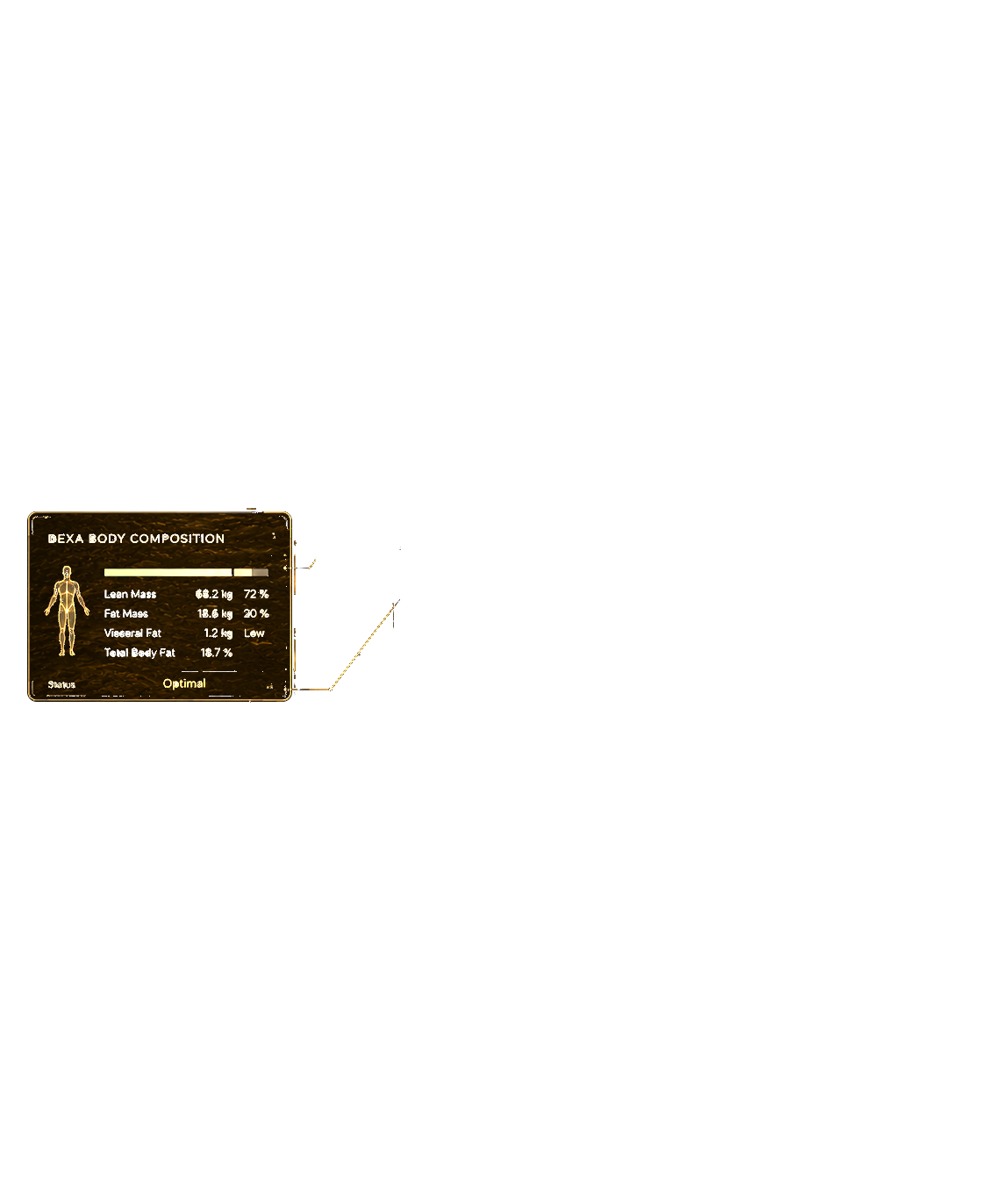
DEXA body composition scanning measures fat mass, lean mass, regional distribution and visceral fat with a level of precision beyond standard weight or BMI measures.
It helps distinguish between weight, muscle, fat and distribution, allowing progress to be understood more accurately.
The scan can support targeted nutrition, training and metabolic health planning.
Assessment & Measurement
DEXA Bone Health & Osteoporosis Scan
DEXA bone health scanning assesses bone mineral density and can help identify reduced bone strength or osteoporosis risk.
This is particularly relevant where ageing, hormonal change, previous injury, low body weight or nutritional factors may affect long-term resilience.
The results can inform exercise, nutrition, supplementation and medical follow-up where appropriate.
Assessment & Measurement
Resting Metabolic Rate Testing
Resting metabolic rate testing measures the energy the body uses at rest, giving a more accurate baseline than formula-based estimates.
It can help explain why weight, energy or body composition may not be changing as expected.
The result can support nutrition planning, energy availability assessment and long-term metabolic strategy.
Assessment & Measurement
FatMax Metabolic Testing
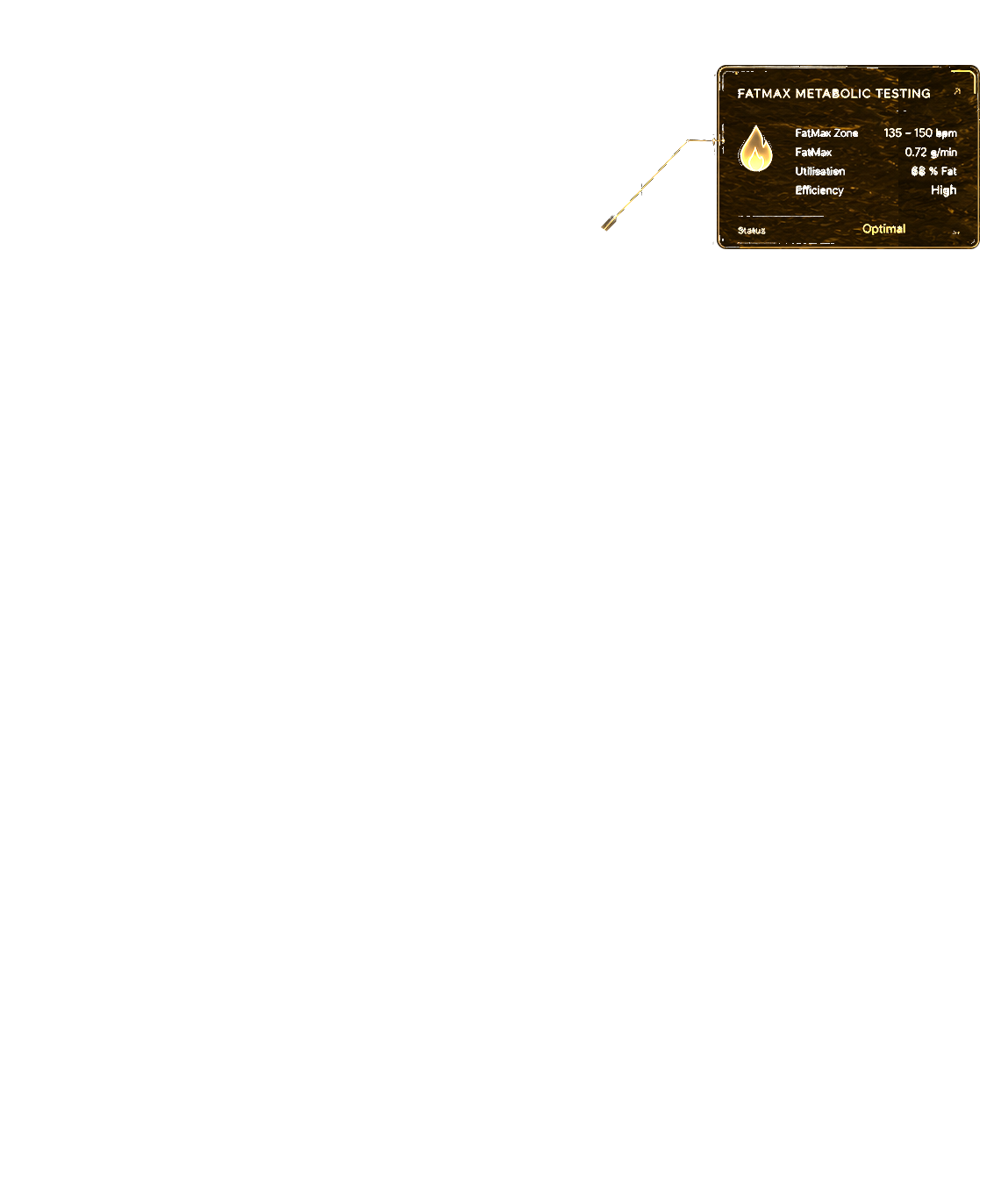
FatMax testing identifies the exercise intensity at which fat oxidation is highest, helping define the most efficient training zone for metabolic conditioning.
It gives practical guidance for improving endurance, metabolic flexibility and the efficiency of fat metabolism.
The result can be used to tailor Zone 2 training and track changes over time.
Assessment & Measurement
VO₂ Max Fitness Testing
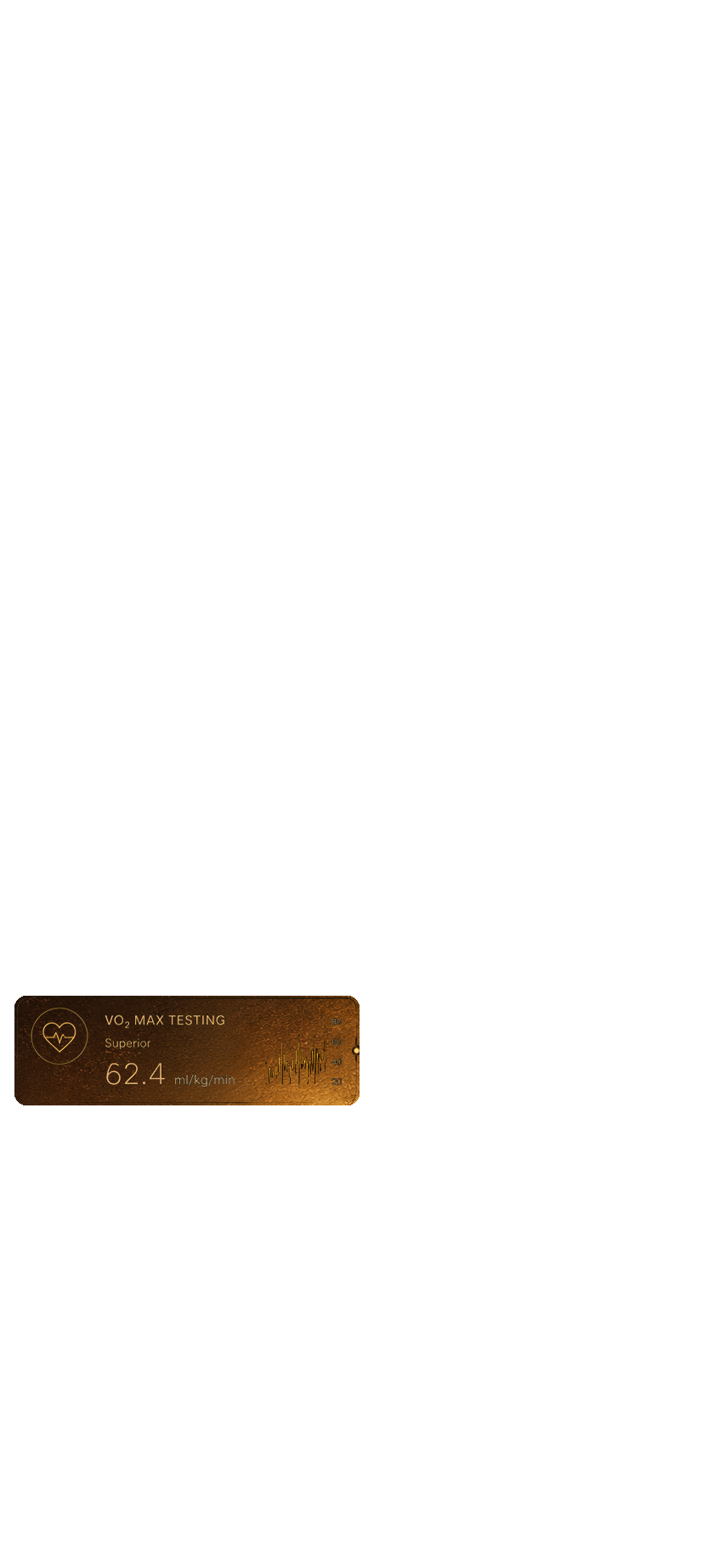
VO₂ max testing measures the body’s ability to take in, transport and use oxygen during high-intensity exercise.
It is one of the most useful markers of cardiorespiratory fitness and provides a baseline for performance improvement.
The result helps guide training intensity, monitor progress and assess cardiovascular capacity.
Assessment & Measurement
Lactate Threshold Testing
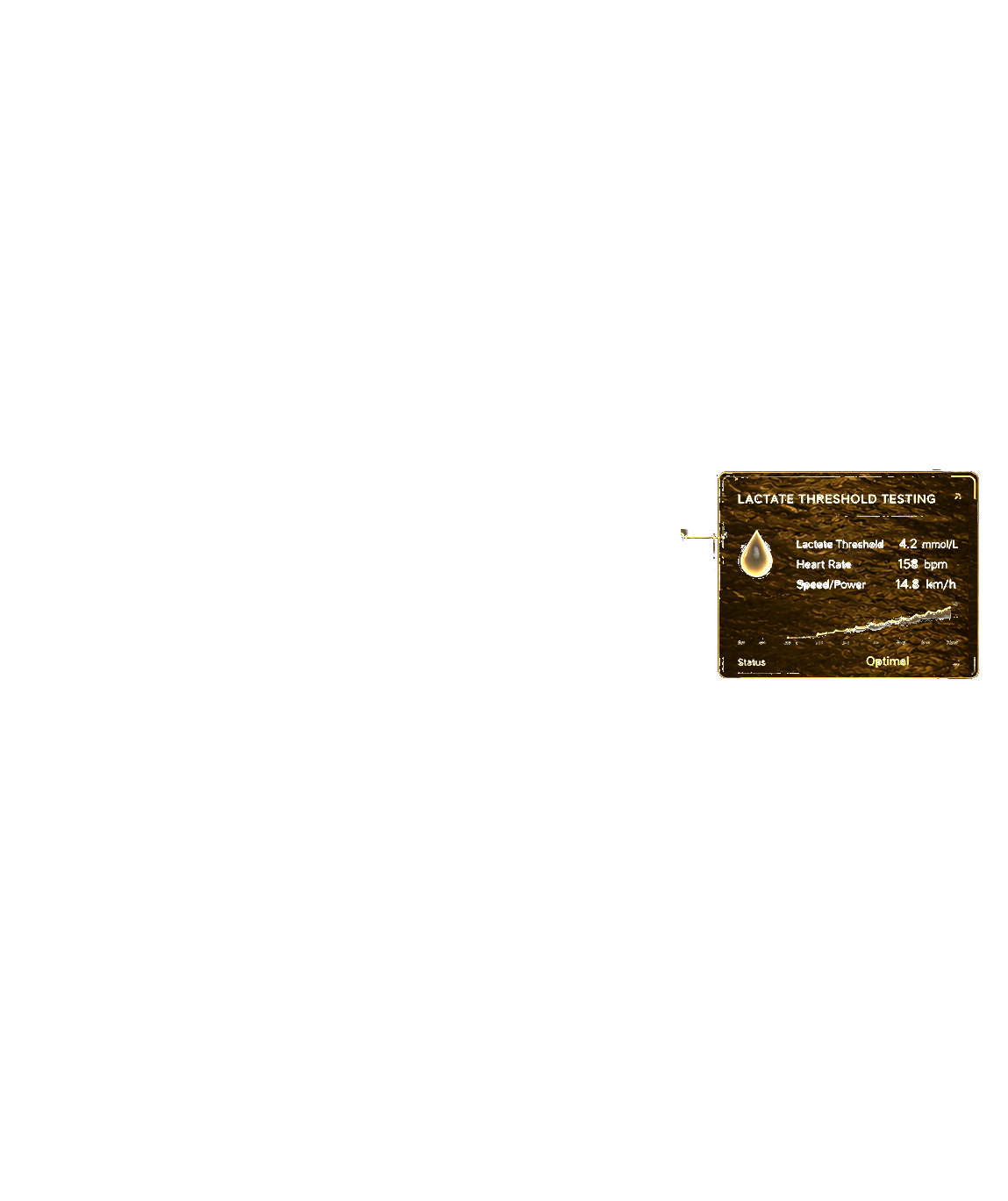
Lactate threshold testing assesses how the body responds to increasing exercise intensity by measuring lactate accumulation.
It helps define training zones, identify sustainable intensity and guide improvements in endurance and metabolic efficiency.
Used alongside heart rate and perceived effort, it provides a practical framework for structured conditioning.
Assessment & Measurement
Cardiac & Autonomic Monitoring
Cardiac and autonomic monitoring uses measures such as heart rate, exercise response and heart rate variability to assess cardiovascular load and nervous system recovery.
These signals help identify whether the body is adapting, under-recovered or carrying excessive physiological stress.
Monitoring may be used during training, recovery periods and overnight assessment to guide programme intensity.
Assessment & Measurement
Sleep & Recovery Assessment
Sleep and recovery assessment examines sleep duration, sleep quality, sleep architecture and overnight recovery patterns.
Wearable EEG and related monitoring may be used where appropriate to provide insight into deep sleep, REM sleep, sleep efficiency and recovery status.
The aim is to identify barriers to physical recovery, cognitive performance and metabolic regulation, then improve the conditions that support restoration.
Applying The Appropriate Intervention
Assessment helps identify where improvement may be possible. Intervention is the process of acting on those findings.
For some individuals, the priority may be recovery from surgery, reducing swelling, restoring mobility and creating the conditions for effective healing. Others may benefit most from improving aerobic fitness, metabolic efficiency or physical resilience. Some may require better sleep, nutritional optimisation or a greater focus on restoration and recovery.
The objective is not simply to provide treatments. It is to select the interventions most relevant to the individual and to combine them in a way that supports meaningful progress towards a defined outcome.
For individuals recovering from surgery, therapies involving water are only used following appropriate clinical permission.
Physical Conditioning
Building physical capacity, efficiency and resilience through targeted exercise and physiological adaptation.1,2,3
Zone 2 Training
Improving aerobic efficiency and fat metabolism through sustained low-intensity exercise.4,5
VO₂ Max Training
Improving cardiovascular capacity and maximal oxygen utilisation.2,3
Cardiac-Guided Training
Using heart rate and physiological monitoring to individualise training intensity and recovery.2,3
Lap Pool Training
Low-impact conditioning, aerobic development and recovery-focused exercise.1,6
Recovery Therapies
Supporting healing, circulation, comfort, mobility and restoration during recovery.7,8,9,10,11
Hyperbaric Oxygen Therapy
Pressurised oxygen therapy intended to increase oxygen availability to tissues and support selected recovery and wound-healing processes.7,8
Compression Therapy
Mechanical compression designed to support circulation and reduce fluid accumulation.9,10
Therapeutic Massage
Hands-on treatment intended to reduce muscular tension and support recovery.11
Lymphatic Drainage Massage
Techniques intended to encourage lymphatic movement and fluid clearance.12
Heated Water Beds
Warmth and buoyancy designed to encourage relaxation and physical recovery.13
Jacuzzi
Warm hydrotherapy intended to promote relaxation, comfort and physical support.13
Thermal & Environmental Therapies
Using temperature, humidity and sensory environments to support comfort, relaxation and physiology wellbeing.14,15,18,19
Sauna
Heat exposure intended to support cardiovascular adaptation, relaxation and recovery.14
Rasul
A heat and steam ritual combining warmth, humidity and mineral-rich mud treatments.15
Halotherapy
Controlled exposure to salt-rich air within a dedicated environment.16,17
Aromatherapy
Use of essential oils and scent-based interventions to influence comfort and relaxation.18,19
Metabolic Support & Nutrition
Supporting recovery, health and performance through targeted nutrition and supplementation.20,21,14
Personalised Nutrition Planning
Individual dietary strategies informed by assessment findings and objectives.20,21
Intravenous Nutrient Therapy
Administration of selected vitamins, minerals or micronutrients where appropriate.22,23
Supplement Optimisation
Review and selection of supplements based upon individual requirements and goals.24
Evidence and References
1.World Health Organization. Physical Activity Fact Sheet. Updated 2024.
3.American College of Sports Medicine. ACSM’s Guidelines for Exercise Testing and Prescription.
4.Meixner B, et al. Zone 2 Intensity: A Critical Comparison of Individual Variability. 2025.
5.Bishop DJ, Lee MJC, Picard M. Exercise as Mitochondrial Medicine. Annual Review of Physiology. 2025.
7.Undersea & Hyperbaric Medical Society. Hyperbaric Oxygen Therapy for Compromised Grafts and Flaps.
8.Cochrane Review. Hyperbaric oxygen therapy for treating chronic wounds.
17.Nugraha RV, et al. Halotherapy as Adjuvant Therapy for Respiratory Diseases. 2024.
22.Drug and Therapeutics Bulletin. Intravenous vitamin injections: where is the evidence? BMJ. 2023.
23.Alangari A, et al. To IV or Not to IV: The Science Behind Intravenous Vitamin Therapy. 2025.
24.Australian Institute of Sport. Sports Supplement Framework and Evidence Classification System.